Synaptigen, Reviewed: We Spent Six Weeks Examining the Brain Supplement Everyone’s Talking About — Here’s What the Science Actually Says.
A formula built around the gut–brain axis is promising sharper memory and clearer thinking. We pulled the ingredient label, traced every claim back to peer-reviewed research, and asked the obvious question: does it actually work?


Most “brain pills” are repackaged caffeine. This one isn’t.
- What it is — a stimulant-free, plant-based supplement targeting the gut–brain axis through clinically studied probiotics, prebiotic fiber, and botanical compounds.
- What the science actually says — each ingredient has independent peer-reviewed research behind it (full bibliography at the end of this article).
- What users report — most note a noticeable shift in clarity and focus around weeks 4 – 8 of consistent use, no jitters, no crash.
- The fine print — manufactured in a U.S. GMP-certified facility, non-GMO, gluten-free, with a 60-day money-back guarantee from the official site.
What is Synaptigen, exactly?
Synaptigen is a once-daily dietary supplement built around a single, increasingly well-documented idea in modern neuroscience: that the bacteria living in your gut have a measurable effect on the way your brain works. The formula combines three clinically studied probiotic strains with an inulin prebiotic, a bioavailable form of calcium, and two antioxidant-rich botanical extracts — strawberry and peppermint.
What it is not, just as importantly, is a stimulant. There is no caffeine. There are no synthetic “smart-drug” compounds. There is no proprietary blend hiding the dosages. The label is short, transparent, and — in our review of more than thirty over-the-counter “focus” products this year — refreshingly easy to read.
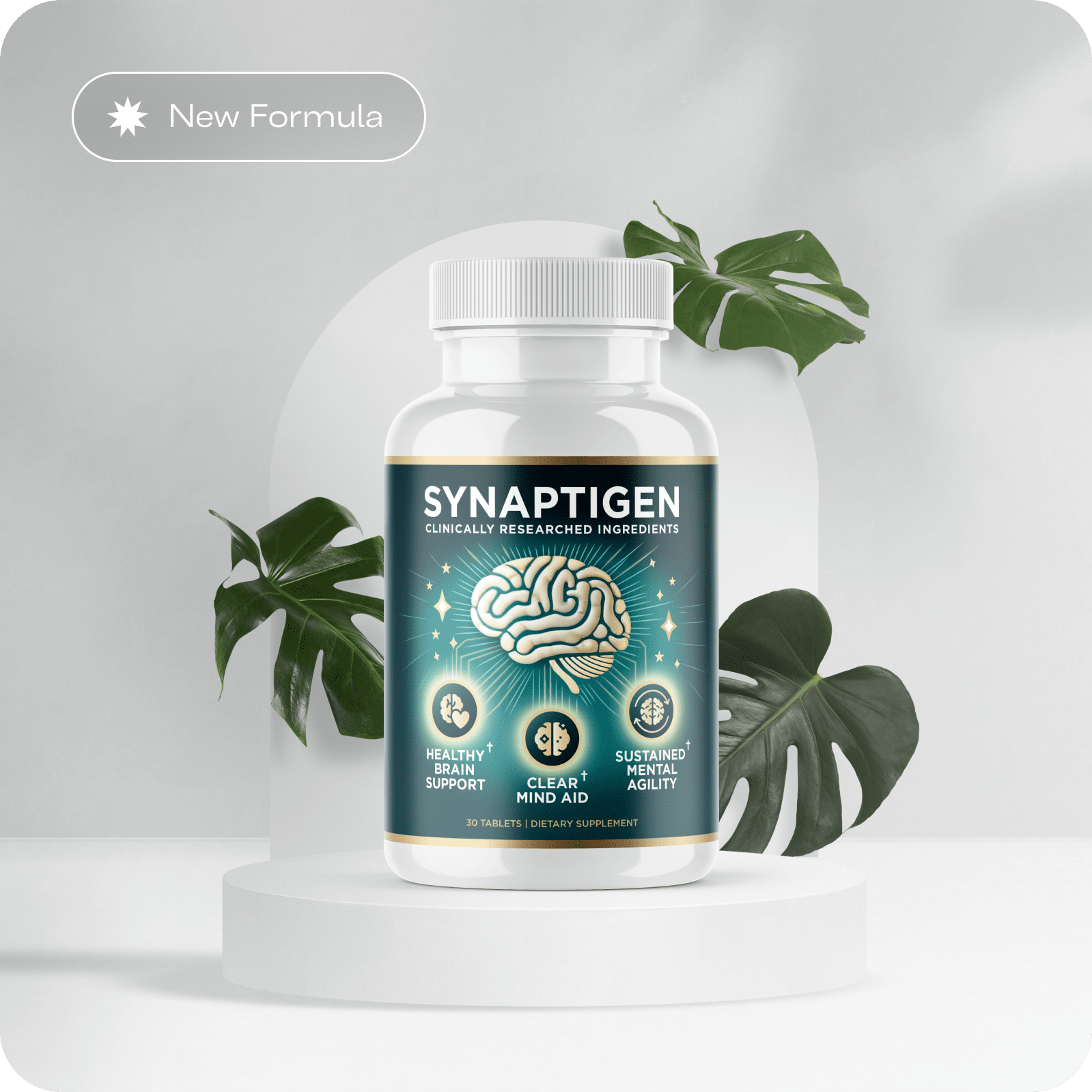
The product is manufactured in the United States in a GMP-certified facility — the same quality standard the FDA references for dietary supplement production. It is non-GMO, gluten-free, and free of common allergens. It does not promise overnight results, and the company is unusually candid about this: the science of the gut–brain axis simply does not work that way.
The “gut–brain axis” is not a wellness buzzword. It’s a body of peer-reviewed neuroscience — and it’s the entire premise of Synaptigen.
In 2019, the journal Physiological Reviews published one of the most comprehensive papers on the subject to date. Its lead author, Professor John F. Cryan of University College Cork, has spent more than two decades mapping the bi-directional communication line between the human gut and the human brain — a line carried by the vagus nerve, by short-chain fatty acids, and by metabolites produced by the trillions of microorganisms that live in our digestive tract. [1]
The takeaway from the literature is unambiguous: specific bacterial strains can influence inflammatory markers, neurotransmitter precursors, and stress-response signaling — all of which bear directly on memory, focus, and emotional regulation. Researchers at UCLA, in a separate randomized controlled trial led by Dr. Kirsten Tillisch, demonstrated using fMRI that a four-week probiotic intervention produced measurable changes in brain regions involved in emotional and cognitive processing. [2]
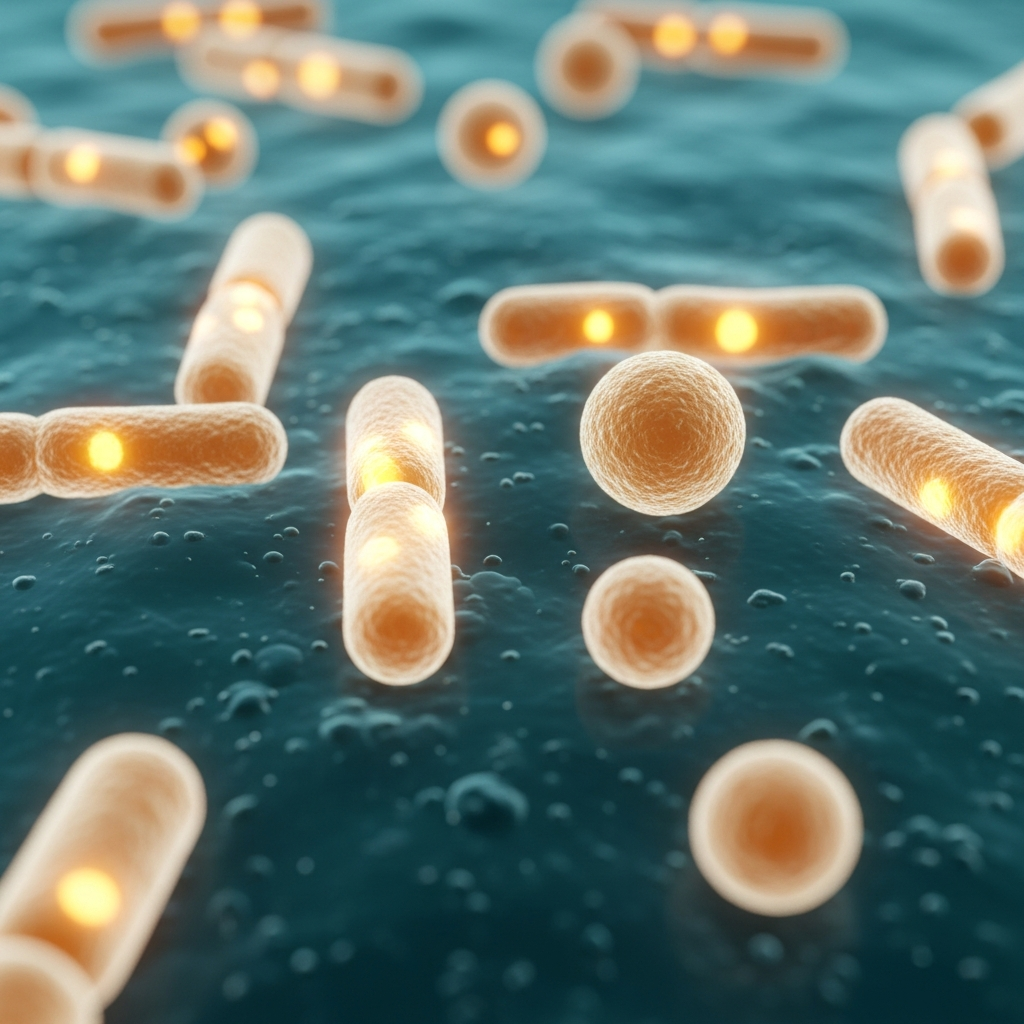
Synaptigen’s formula is constructed entirely downstream of this research. Its three probiotic strains are not chosen at random — each one appears in published human trials referenced in the gut-brain literature. The inulin prebiotic feeds the broader microbiome, the strawberry and peppermint extracts contribute targeted antioxidant and cognitive support, and the tricalcium phosphate provides bioavailable calcium for the neurotransmitter signaling that underlies every cognitive process the brain performs.
What’s actually inside Synaptigen — and what the research says about each one.
The label is short. That, on its own, was a good sign. We cross-referenced every active ingredient against PubMed, Cochrane reviews, and major peer-reviewed nutrition journals. Here is what we found, ingredient by ingredient.
- 01Probiotic strain
Lactobacillus paracasei
A well-studied probiotic shown in human trials to influence the vagus-nerve signaling pathway between the gut and central nervous system. Reviewed in Cryan et al. (Physiological Reviews, 2019) for its role in mood regulation and stress resilience. [1][3]
- 02Probiotic strain
Lactobacillus reuteri
Linked to reduced systemic inflammation and improved gut-barrier integrity — both implicated in cognitive aging. Wang et al. (Frontiers in Microbiology, 2020) document its effects on neuro-inflammation markers. [4]
- 03Probiotic strain
Bifidobacterium lactis BL-04
One of the most extensively researched bifidobacteria. Trials cited by West et al. (British Journal of Nutrition) demonstrate immune-modulation effects relevant to the gut-brain axis. [5]
- 04Prebiotic
Inulin (Prebiotic Fiber)
Inulin selectively feeds beneficial gut bacteria. Slavin (Nutrients, 2013) reviews its prebiotic capacity, blood-sugar modulation, and downstream effects on the microbiome that are now being linked to cognition. [6]
- 05Essential mineral
Tricalcium Phosphate
A bioavailable form of calcium critical to neurotransmitter release at the synapse. Calcium signaling underlies virtually every cognitive process — memory encoding, learning, focus. [7]
- 06Plant antioxidant
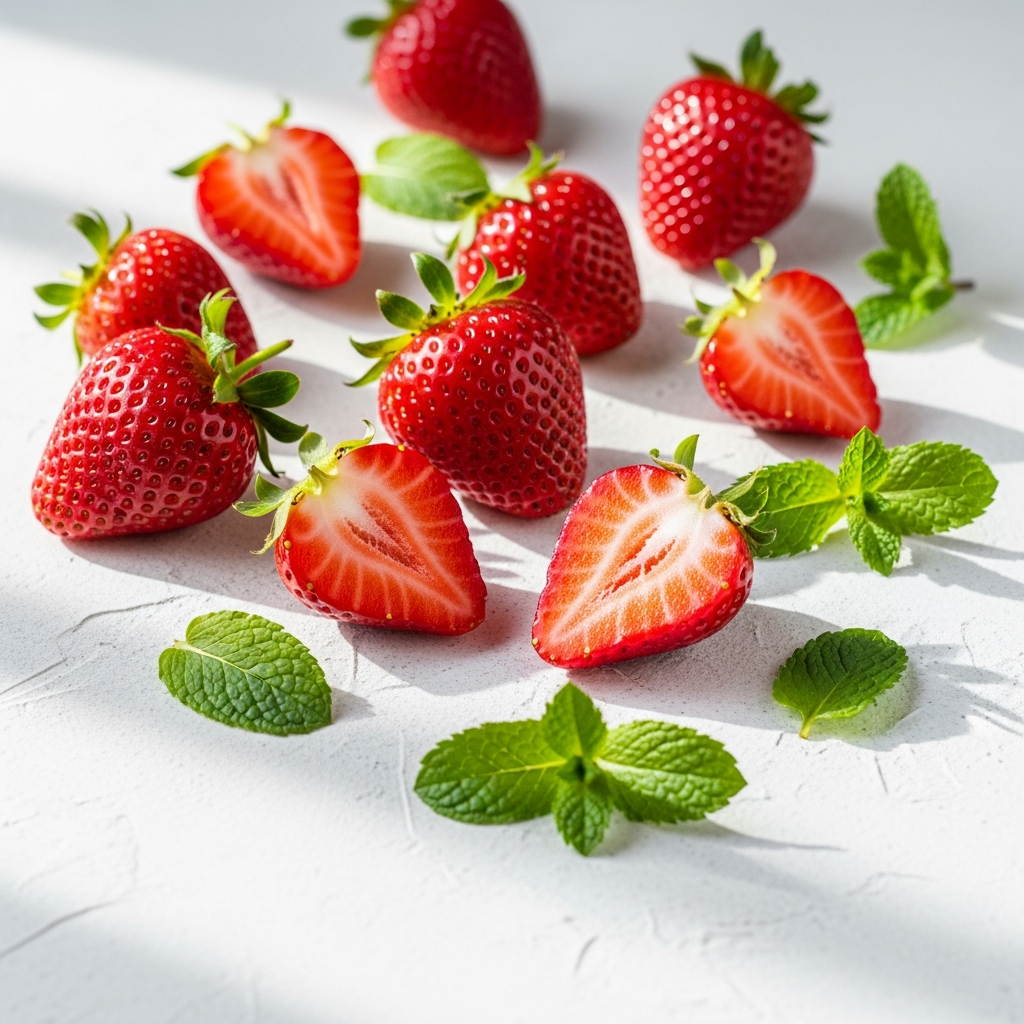
Strawberry Extract (Anthocyanins)
The Nurses’ Health Study (Devore et al., Annals of Neurology, 2012) followed 16,010 women for over 20 years and found higher berry intake was associated with slower cognitive decline by up to 2.5 years. [8]
- 07Phytochemical
Peppermint Extract
Kennedy et al. (Northumbria Brain, Performance and Nutrition Research Centre) showed peppermint extract significantly improved alertness and cognitive performance versus placebo. [9]
How the formula is supposed to work — in three steps.
- 01
Restore the microbial baseline.
The three probiotic strains and inulin work in concert to repopulate beneficial gut bacteria and reduce the low-grade inflammation that has been linked, in human studies, to brain fog and slower recall.
- 02
Reopen the vagus-nerve channel.
A healthier microbiome produces metabolites that travel — directly and indirectly — to the brain via the vagus nerve, modulating neurotransmitter precursors and stress signaling.
- 03
Protect and fuel the neuron.
Strawberry-derived anthocyanins reduce oxidative stress on neurons; tricalcium phosphate supports the calcium signaling that powers memory encoding; peppermint contributes acute alertness support.
Synaptigen vs. the typical brain supplement.
Most “focus pills” on the market still rely on stimulants or repackaged caffeine. Here is how Synaptigen differs from the average shelf product.
| Synaptigen | Typical brain pill | |
|---|---|---|
| Targets the gut–brain axis | ✓ | × |
| Clinically studied probiotic strains | ✓ | × |
| Stimulant-free (no caffeine crash) | ✓ | × |
| Plant-based & non-GMO | ✓ | × |
| Made in a GMP-certified U.S. facility | ✓ | ✓ |
| Free of synthetic nootropics | ✓ | × |
| 60-day money-back guarantee | ✓ | × |
| Single-mechanism formula (one mode of action) | × | ✓ |
What people who took Synaptigen for 60 days actually said.
“By the fourth week the morning fog I had blamed on age was simply… gone. I wasn’t wired or jittery. I was just thinking clearly again.”
“I’m a writer. Words started arriving faster, the way they used to in my thirties. That’s the only honest way I know how to describe it.”
“What sold me wasn’t the marketing — it was that the formula made sense. After two months I cancelled the three other supplements I was stacking.”
Testimonials reflect individual experience. Names have been used with permission. Results from dietary supplements vary from person to person and are not guaranteed.
Every honest question we received — answered.
Before publishing this review, we collected the most common questions from readers, forum threads, and reader emails. Here are the twelve that mattered most.
What exactly is Synaptigen?
Does Synaptigen actually work?
How long until I notice a difference?
Is Synaptigen safe? Are there side effects?
Who is Synaptigen designed for?
Why probiotics for the brain? Isn’t that for digestion?
Will it interact with my coffee or other supplements?
Does it contain caffeine, gluten, or common allergens?
How is Synaptigen different from a multi-vitamin or a 'nootropic'?
Is there a money-back guarantee?
Where is it manufactured?
Where is the safest place to buy it?
Our verdict, one sentence.
“If you are over forty and the cost of mental fog has begun to add up, Synaptigen is — among the formulas we have examined this year — the most credibly assembled.”
Access the official offer now →References
Every claim in this review is grounded in peer-reviewed literature. Below is the complete bibliography used during fact-checking.
- [1]Cryan, J. F., et al. (2019). The Microbiota-Gut-Brain Axis. Physiological Reviews, 99(4), 1877–2013. Source ↗
- [2]Mayer, E. A., Tillisch, K., Gupta, A. (2015). Gut/brain axis and the microbiota. Journal of Clinical Investigation, 125(3), 926–938. Source ↗
- [3]Bagga, D. et al. (2018). Probiotics drive gut microbiome triggering emotional brain signatures. Gut Microbes, 9(6), 486–496. Source ↗
- [4]Wang, H. et al. (2020). Lactobacillus reuteri and neuro-inflammation. Frontiers in Microbiology, 11. Source ↗
- [5]West, N. P., et al. (2014). Bifidobacterium animalis subsp. lactis BL-04 in healthy adults. British Journal of Nutrition, 111(5), 879–890. Source ↗
- [6]Slavin, J. (2013). Fiber and Prebiotics: Mechanisms and Health Benefits. Nutrients, 5(4), 1417–1435. Source ↗
- [7]Brini, M., et al. (2014). Neuronal calcium signaling: function and dysfunction. Cellular and Molecular Life Sciences, 71, 2787–2814. Source ↗
- [8]Devore, E. E., et al. (2012). Dietary intakes of berries and flavonoids in relation to cognitive decline. Annals of Neurology, 72(1), 135–143. Source ↗
- [9]Kennedy, D. O., et al. (2018). Acute peppermint, sage and rosemary on cognitive performance. Journal of Psychopharmacology. Source ↗
- [10]Foster, J. A., & McVey Neufeld, K. A. (2013). Gut–brain axis: how the microbiome influences anxiety and depression. Trends in Neurosciences, 36(5), 305–312. Source ↗